If you want to raise your nitric oxide, what you drink is one of the fastest levers you have. Nitric oxide is the molecule that relaxes and widens your blood vessels, which improves circulation to your heart, brain, and muscles. Your body makes less of it as you age, and the right drink delivers the raw materials it needs in a form that absorbs quickly. A glass of beet juice can shift your nitric oxide within hours, which is why athletes drink it before a race and why it has become a daily habit for people focused on heart health.
This guide covers the four drinks with the strongest case for boosting nitric oxide, how each one works, and the habits that drain it back down. It is written and reviewed against the published research of Dr. Nathan S. Bryan, Ph.D., a molecular medicine researcher who studies how the body produces and uses this molecule.
How Drinks Boost Nitric Oxide
Most nitric oxide boosting drinks work through one pathway: dietary nitrate. Vegetables like beets and leafy greens are rich in nitrate, and when you drink them as a juice, bacteria in your mouth convert that nitrate to nitrite, which your body then turns into nitric oxide. This route does not depend on the enzyme that weakens with age, which is why it works well for older adults where older amino acid supplements often fall short. Liquids also reach you fast, since juicing breaks down the plant cell walls and your gut absorbs the nitrate without much delay.
A second group of drinks helps in a different way. Instead of supplying nitrate directly, they deliver antioxidants that protect the nitric oxide you already make from breaking down too soon. Both routes are useful, and the best routine uses some of each.
4 Drinks That Directly Boost Nitric Oxide
1. Beet Juice, the Strongest Choice
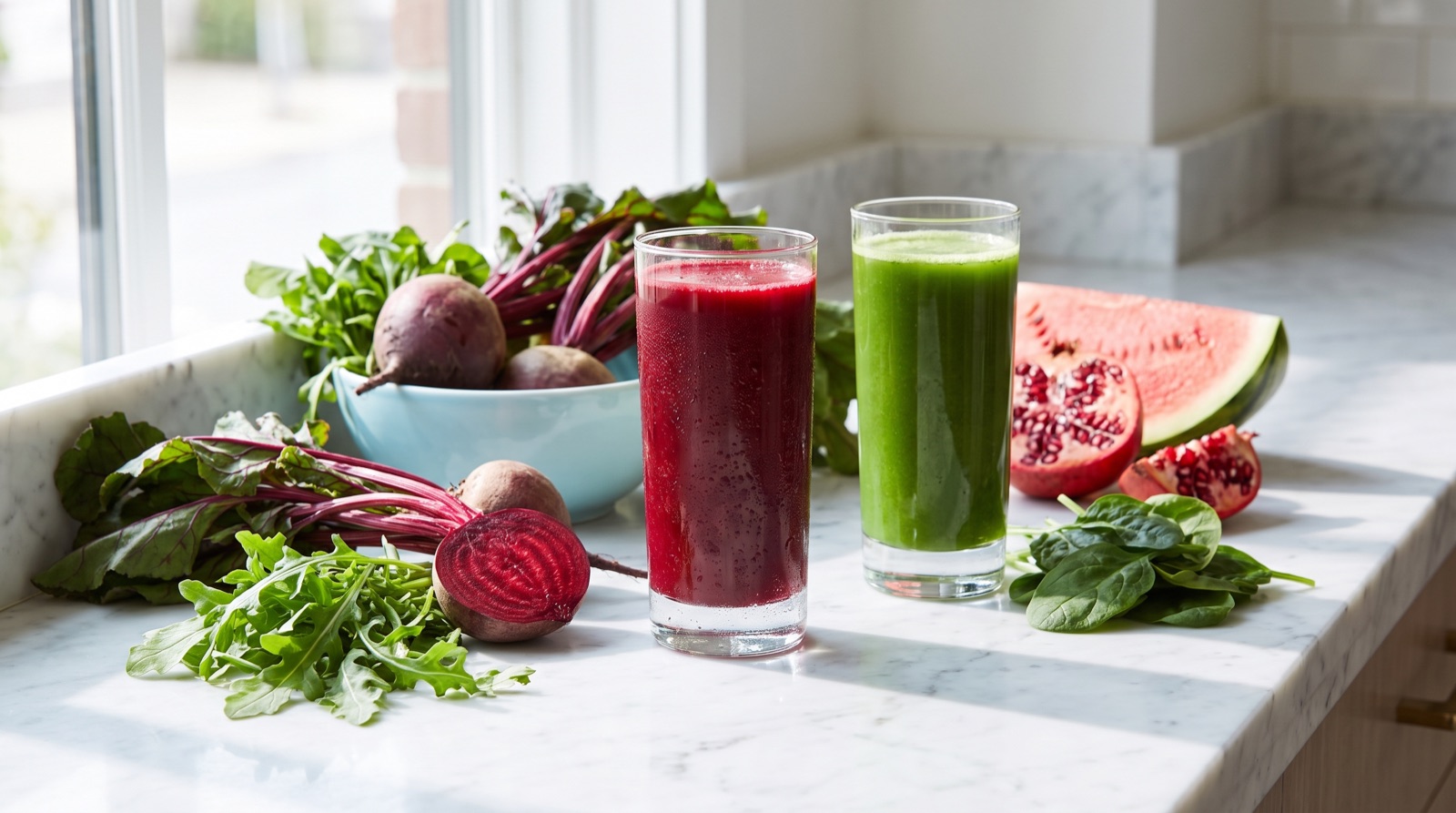
Beet juice is the clearest winner. Beets are one of the richest dietary sources of nitrate, and beet juice is the most studied nitric oxide drink for a reason. It is the go to for athletes looking for better blood flow and endurance, and for anyone working on blood pressure and circulation. The downside is taste and sugar. Beet juice is earthy and naturally sweet, so check the label if you are watching sugar, and consider mixing it with greens or a splash of citrus.
2. Leafy Green Juice or a Green Smoothie
Spinach, arugula, and kale are loaded with the same dietary nitrate that makes beets effective, which makes a green juice or smoothie a strong daily option. A smoothie has an edge over a pressed juice because it keeps the fiber, which slows the sugar and keeps you fuller. Blend a handful of spinach or arugula with a little fruit and you have a nitrate rich drink that does not taste like a chore.
3. Pomegranate Juice
Pomegranate juice works through the second route. It is rich in polyphenol antioxidants that help protect nitric oxide from breaking down, so the nitric oxide you produce lasts longer and does more. It pairs well with a nitrate drink rather than replacing it. As with any juice, watch the sugar and favor an unsweetened version.
4. Watermelon Juice
Watermelon is one of the few foods naturally high in L-citrulline, an amino acid the body can use to make nitric oxide. Watermelon juice is a refreshing way to get it, and some people use it before exercise. One honest caveat: the citrulline route relies on an enzyme that becomes less efficient with age, so watermelon tends to help younger adults more than older ones. If you are over 40, lean on the nitrate drinks above and treat watermelon as a bonus.
When and How Much to Drink
Timing depends on your goal. If you want a circulation boost for a workout or a busy day, a nitrate drink an hour or two beforehand makes sense, since dietary nitrate raises nitric oxide within that window. If your goal is steady support for blood pressure and heart health, the time of day matters less than doing it every day. A small daily glass of beet or green juice beats a large glass once a week, because nitric oxide is something your body uses up and remakes constantly rather than stores. Start with a modest amount, see how your stomach and taste handle it, and build from there. If beet juice feels too sweet or earthy on its own, cut it with greens, cucumber, or a squeeze of lemon.
The Easiest Option When You Will Not Juice Every Day
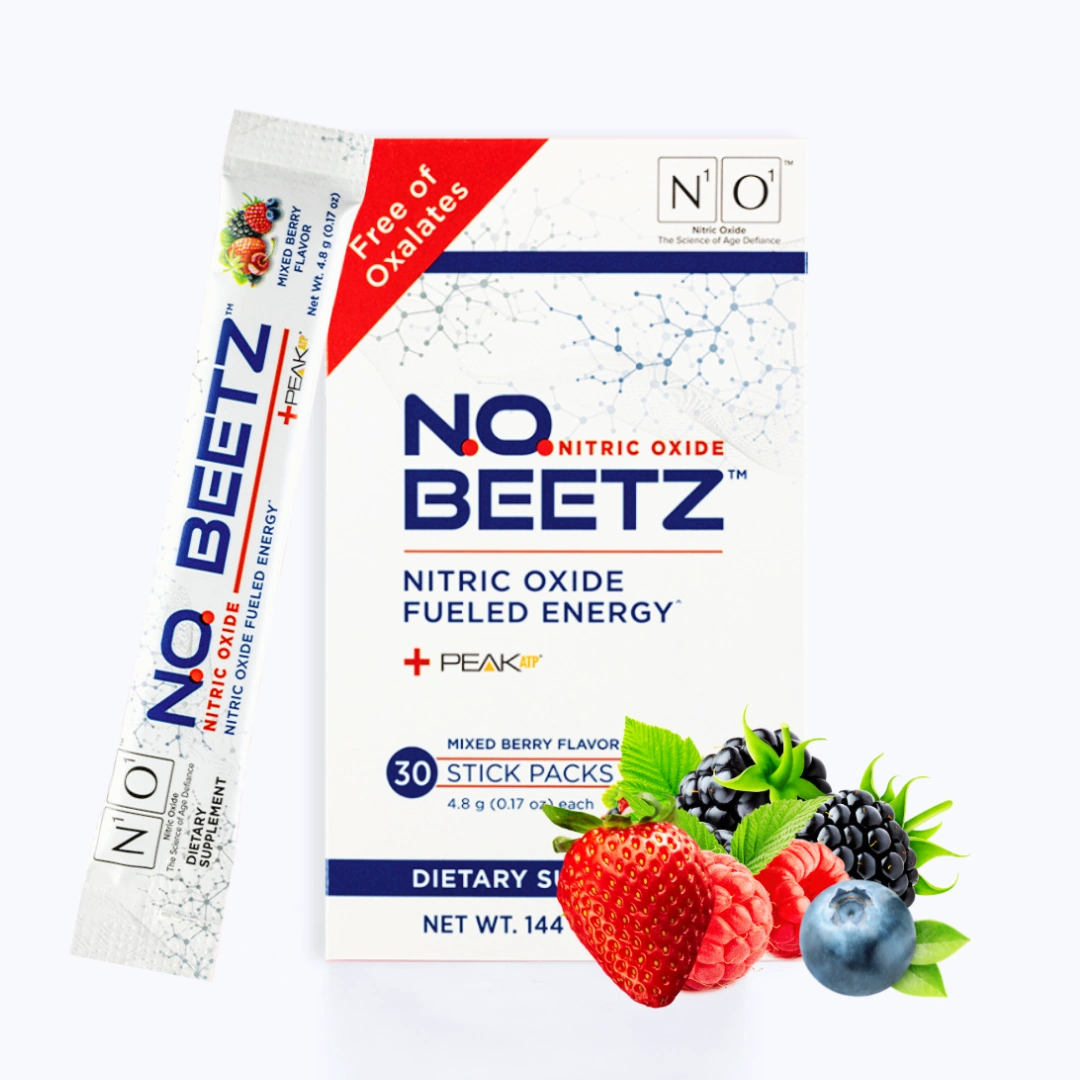
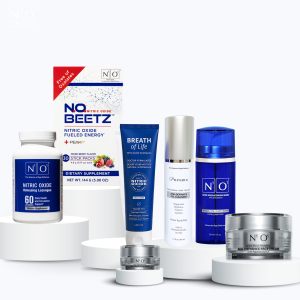
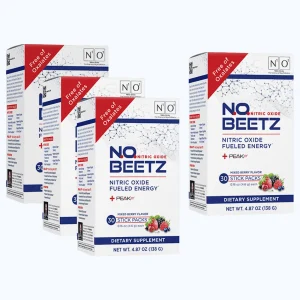
Fresh juicing is great in theory and easy to skip in practice. If you want the beet benefit without the cleanup, a beetroot drink mix like N.O. Beetz gives you a measured dose of dietary nitrate in one scoop, with the nitrate content standardized rather than left to whatever beets you happened to buy. It is the practical middle ground between a daily juicing habit and doing nothing. For a side by side look at every format, see our guide to the best nitric oxide supplements.
Drinks and Habits That Lower Nitric Oxide
Raising nitric oxide is only half the job. A few common habits work against you:
- Antiseptic mouthwash. This is the big one. Antiseptic mouthwash kills the oral bacteria that convert nitrate to nitrite, which can shut down the first step of the whole pathway. If you drink beet juice in the morning and rinse with antiseptic mouthwash, you may be canceling out your own effort.
- Sweetened bottled juices. A lot of store juice is more sugar than benefit. Sugar spikes do your blood vessels no favors, so read labels and pick unsweetened.
- Excess alcohol. Heavy drinking is hard on the blood vessel lining, called the endothelium, which is the very tissue that produces nitric oxide. An occasional drink is one thing, but a regular heavy habit works against everything the beet juice is trying to do.
How to Build a Daily Nitric Oxide Routine
Drinks are one piece. To get the full effect, combine them with the right food and movement:
- Eat the whole foods too. Drinks are fast, but whole vegetables matter just as much. See our guide to the best nitric oxide foods to round out your plate.
- Move daily. Exercise itself stimulates nitric oxide production, so a beet drink and a brisk walk pull in the same direction.
- Stay consistent. Nitric oxide is not a one time event. A daily nitrate drink does far more than an occasional one. For more on raising your levels, read how to raise nitric oxide levels naturally.
What Drinks Boost Nitric Oxide?
The four drinks with the strongest case for boosting nitric oxide are beet juice and leafy green juice, which supply dietary nitrate directly, pomegranate juice, which protects the nitric oxide you already make, and watermelon juice, which provides citrulline that younger adults convert well. Beet juice is the strongest single choice, and a standardized beetroot drink mix is the easiest way to get it daily without juicing.
Frequently Asked Questions
What drink is highest in nitric oxide?
Beet juice has the strongest case. Beets are one of the richest dietary sources of nitrate, the raw material your body converts to nitric oxide, and beet juice is the most studied nitric oxide drink. Leafy green juice from spinach, arugula, or kale is a close second.
How fast does beet juice raise nitric oxide?
Dietary nitrate from a beet drink can raise nitric oxide within a few hours, which is why athletes drink it before activity. The bigger benefits to circulation and blood pressure build with daily, consistent use rather than a single glass.
Does pomegranate juice boost nitric oxide?
Pomegranate juice helps in an indirect way. It is rich in polyphenol antioxidants that protect nitric oxide from breaking down too quickly, so it works best alongside a nitrate drink like beet or green juice rather than on its own.
Are nitric oxide drinks better than supplements?
They do similar work through the same nitrate pathway. Fresh drinks are excellent when you make them consistently, while a standardized beetroot mix or lozenge gives you a measured dose and is easier to keep up daily. Many people use both.
Can drinking beet juice replace medication?
No. Beet juice and other nitric oxide drinks support healthy circulation, but they are not a substitute for prescribed medication. If you take blood pressure or heart medication, talk to your doctor before adding beet juice regularly, since it can lower blood pressure further.
Written and medically reviewed by Dr. Nathan S. Bryan, Ph.D. Dr. Bryan is an internationally recognized molecular medicine researcher and the founder of N1O1, whose work focuses on nitric oxide production and human health.
This content is for educational purposes only and is not intended as medical advice. Always consult your healthcare provider before making changes to your diet or starting any new supplement, especially if you take medication for blood pressure or heart conditions.