

Nitric oxide (NO) is a small, simple gas — but its role in human health is anything but small. Made of just one nitrogen atom and one oxygen atom, nitric oxide is a critical signaling molecule that influences blood flow, brain communication, immune defense, and cellular repair.
The body doesn’t store nitric oxide. It produces it only when needed, and the molecule vanishes within seconds. This means we must keep making it constantly to keep our circulation, energy, and organ function at their best.
Understanding nitric oxide and how it is produced helps us take steps to support it — especially as we age, when production naturally declines.
Why Nitric Oxide Matters
Scientists discovered nitric oxide’s importance in the late 20th century, earning the 1998 Nobel Prize in Physiology or Medicine for research showing that it acts as a key signaling molecule in the cardiovascular system.
Here’s why nitric oxide is so vital:
- Vasodilation – Relaxes and widens blood vessels, improving circulation.
- Blood Pressure Regulation – Helps maintain healthy pressure in the arteries.
- Oxygen Delivery – Increases oxygen transport to muscles, the brain, and organs.
- Sexual Health – Supports erectile function and sexual arousal through increased blood flow.
- Exercise Performance – Enhances endurance and recovery by improving oxygen supply.
- Immune Defense – Assists immune cells in destroying harmful bacteria and viruses.
- Brain Health – Acts as a neurotransmitter in nerve signaling.
Because nitric oxide impacts nearly every major system, low levels can contribute to fatigue, poor circulation, cognitive decline, and increased risk of chronic disease.

Two Pathways for Nitric Oxide Production
The body has two primary methods of making nitric oxide.
1. The Nitric Oxide Synthase (NOS) Pathway
This is the enzymatic pathway, where the amino acid L-arginine is converted into nitric oxide by enzymes called nitric oxide synthases (NOS). It requires:
- Oxygen
- Cofactors like BH4 (tetrahydrobiopterin), NADPH, and calcium
- Healthy endothelial cells (lining the blood vessels)
Types of NOS Enzymes:
- eNOS (endothelial NOS) – Found in blood vessel linings, controlling vascular tone.
- nNOS (neuronal NOS) – Found in nerve cells, regulating communication in the brain and nervous system.
- iNOS (inducible NOS) – Found in certain immune cells, producing large amounts of nitric oxide to fight pathogens.
Step-by-Step Process:
- L-arginine enters the cell.
- NOS enzymes use oxygen and cofactors to produce nitric oxide and L-citrulline.
- Nitric oxide diffuses into nearby smooth muscle cells, triggering relaxation and improved blood flow.
This pathway works best in well-oxygenated tissues and with a healthy vascular endothelium. Damage from smoking, high blood sugar, or chronic inflammation can impair it.
2. The Nitrate–Nitrite–Nitric Oxide Pathway
This is the dietary pathway, which bypasses the need for NOS enzymes and works even when oxygen levels are low.
How It Works:
- Eat nitrate-rich foods like spinach, arugula, beets, celery, and lettuce.
- Nitrate is absorbed into the blood and concentrated in the saliva.
- Good bacteria on the tongue convert nitrate into nitrite.
- After swallowing, nitrite can convert into nitric oxide in the acidic stomach or later in oxygen-poor tissues.
This pathway acts as a backup system, keeping nitric oxide levels up during exercise, hypoxia, or when the NOS system is impaired.

Why Nitric Oxide Production Declines
Several factors reduce nitric oxide production over time:
- Aging – Endothelial cells produce less nitric oxide with age.
- Dietary Deficiency – Low intake of nitrate-rich vegetables reduces raw materials.
- Oral Microbiome Changes – Antibacterial mouthwash and poor oral health reduce nitrate-to-nitrite conversion.
- Sedentary Lifestyle – Physical inactivity lowers NOS enzyme activity.
- Oxidative Stress – Caused by smoking, pollution, high sugar diets, and chronic inflammation.
- Medical Conditions – Hypertension, diabetes, and atherosclerosis impair both pathways.
Signs of Low Nitric Oxide Levels
- Fatigue and low stamina
- Poor circulation (cold hands and feet)
- Slower exercise recovery
- Erectile dysfunction
- High blood pressure
- Cognitive decline or brain fog
While these symptoms can have many causes, they often appear when nitric oxide is insufficient.
How to Support Healthy Nitric Oxide Production
Boosting the NOS Pathway:
- Exercise regularly (a mix of aerobic and strength training).
- Eat foods rich in L-arginine (nuts, seeds, legumes, fish) and L-citrulline (watermelon).
- Increase antioxidants (berries, dark leafy greens, colorful vegetables).
- Manage blood pressure and blood sugar.
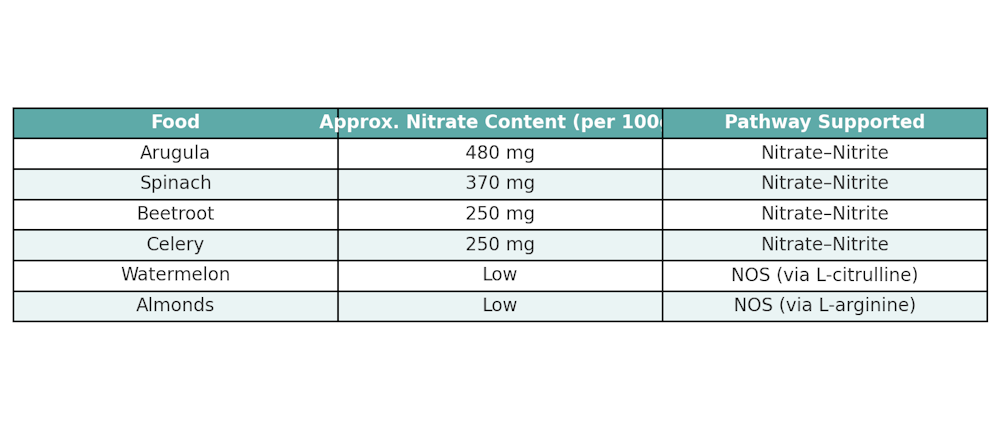
Boosting the Nitrate–Nitrite Pathway:
- Eat nitrate-rich vegetables daily (spinach, arugula, beets, lettuce, celery).
- Limit or avoid antibacterial mouthwash.
- Maintain a healthy oral microbiome with balanced diet and good dental hygiene.
Nitric Oxide Myths
- Myth: Nitric oxide supplements work instantly for everyone.
Truth: Results depend on supporting both pathways and overall vascular health. - Myth: Only athletes need to worry about nitric oxide.
Truth: It is essential for heart, brain, immune, and sexual health at every age. - Myth: Mouthwash doesn’t affect nitric oxide.
Truth: Many mouthwashes destroy oral bacteria needed for nitrate conversion.
The Bottom Line
Nitric oxide is a master regulator of circulation, oxygen delivery, and cell communication. By understanding nitric oxide and how it is produced, and by supporting both the NOS and nitrate–nitrite pathways through diet, lifestyle, and oral health, we can help maintain vitality, performance, and cardiovascular health at any age.
