June marks the beginning of Summer in the Northern Hemisphere and a time when people hit the beach, enjoy the great outdoors and take vacations. Sunlight exposure has known health benefits that are indisputable. However, some people can overdo it can get sun burned. So how do we manage sun exposure and balance the health risks of sunburn vs the health benefits of sunlight exposure? This is no different than any other health modality, it comes down to everything in moderation. Too little can be bad, and too much can be bad.
For all of human civilization, we have been exposed to sunlight. Our early ancestors ran around half naked, even in tropical regions fully exposed to the sun for many hours. At that time, there were no sunglasses, no sunscreen and yet they survived to procreate and help populate the world today. Sunlight is required to make sufficient Vitamin D, a critical hormone. People with low levels of vitamin D levels have higher rates of virtually every disease including cancer, diabetes, obesity, osteoporosis, heart attack, stroke, depression, cognitive impairment, autoimmune conditions, and more. Vitamin D is a hormone manufactured by the skin with the help of sunlight. We also know that is not always sufficient to take a Vitamin D supplement to reach optimal Vitamin D levels in the blood nor is it sufficient to get sufficient Vitamin D from diet. Exposure to sunlight gives us all the Vitamin D we need.
Fast forward thousands of years and today most of us have indoor jobs and we have been told to protect ourselves from dangerous UV rays, which can cause skin cancer. Sunscreen also blocks our skin from making vitamin D, but that’s OK, says the American Academy of Dermatology, which takes a zero-tolerance stance on sun exposure: “You need to protect your skin from the sun every day, even when it’s cloudy,” it advises on its website. Better to slather on sunblock, we’ve all been told, and compensate with vitamin D pills. I think it is time to reconsider these recommendations or in my opinion outright reject these recommendations by “so-called” experts.

A very important study was conducted years ago. Research has established that people who live furthest from the equator have higher rates of high blood pressure, heart disease, stroke, and overall mortality, and these rates further increase during the winter when there is less sun. A Dermatologist, Richard Weller, ask the question “Could exposing skin to sunlight lower blood pressure?” Sure enough, when he exposed volunteers to the equivalent of 30 minutes of summer sunlight without sunscreen, their nitric oxide levels went up and their blood pressure went down. Because of its connection to heart disease and strokes, blood pressure is the leading cause of premature death and disease in the world, and the reduction was of a magnitude large enough to prevent millions of deaths on a global level. Sunlight increases nitric oxide production and we know the benefits of nitric oxide.
These are enormous benefits of sunlight that may be completely independent of the benefits of Vitamin D. Should we be worried about an increase in risk or incidence of skin cancer? I think it is important to put it in proper perspective. Skin cancer kills surprisingly few people: less than 3 per 100,000 in the U.S. each year. For every person who dies of skin cancer, more than 100 die from cardiovascular diseases. In another study of nearly 30,000 women in Sweden over 20 years revealed that women who spent more time in the sun had less frequent blood clots. In the same cohort, it was revealed that people who spent more time in the sun had lower rates of diabetes than those who avoided the sun. Over the 20 years of the study, people who avoided sunlight were twice as likely to die as those who were deliberate about sun exposure. This is amazing data. In a 2016 study published in the Journal of Internal Medicine, the Swedish research group is quoted “Avoidance of sun exposure is a risk factor of a similar magnitude as smoking, in terms of life expectancy.”
But yet still we are told to apply sunscreen, which itself is toxic. Sunscreens contain chemicals that shield users from the UVB rays that cause sunburn but not the UVA rays that cause skin cancer. Even today, SPF ratings refer only to UVB rays, so many users may be absorbing far more UVA radiation than they realize. Meanwhile, many common sunscreen ingredients have been found to be hormone disruptors that can be detected in users’ blood and breast milk. The worst offender, oxybenzone, also mutates the DNA of corals and is believed to be killing coral reefs. Hawaii and the western Pacific nation of Palau have already banned it, to take effect in 2021 and 2020 respectively, and other governments are expected to follow. So sunscreens eliminate the benefits of sunlight exposure and also expose us to toxic chemicals that can cause cancer and other hormone issues. When one objectively looks at the risks vs benefits of sunscreen, anyone with any reason would not use them. Personally, I have never used sunscreen nor have I applied it to my kids. We are also practical and do not spend more than a few hours of full exposure at any given time. Once we have sufficient tan or exposure, we cover up with clothing rather than chemicals. I believe it is also important to avoid sunglasses when you first go out in the sun, especially during summer months. The sun into the eyes elicits protective mechanisms in the body to alert the body to prepare and adapt.

Another interesting question this brings up is the incidence of breast cancer in women and prostate cancer in men. Women’s breast and men’s prostate almost never get exposed to sunlight. Interestingly, red light therapy is used as an adjuvant therapy for both prostate and breast cancer. Do nudists have lower incidence of breast and prostate cancer? Ladies it may be beneficial to sun topless and men maybe this whole sunning your taint has some merit. I don’t have any data but just posing an interesting question.
This summer do not be afraid of the sun. Also use common sense and when you feel you are getting burned, find shade or cover your body with cotton clothing and caps or hats. Exposure to sunlight has enormous health benefits. I list just a few below. The risks are few including sunburns and slight increase in melanoma in some people who overdo it.
Benefits of sunlight:
- Supports Bone Density
- Improve the Immune System: Sunlight is the best disinfectant
- Elevates Serotonin to enhance mood
- Improves Seasonal Depression Relief
- Releases Endorphins
- Resets circadian clock to improve sleep
- Improves nighttime Melatonin production
- Reduces blood pressure reduction by increasing nitric oxide
- Improves autoimmune disease and skin issues like psoriasis and eczema
Sunlight can help Optimize your health. Please join me on my new television show “Your Optimal Health” on NowMedia TV. You can watch NowMedia TV live or on demand. Download the free NowMedia TV app on Roku or iOS and unlock nonstop bilingual programming in English and Spanish. Catch the podcast version at NowMedia TV. From business and news to lifestyle, culture, and beyond — NowMedia TV is streaming around the clock, ready whenever you are.
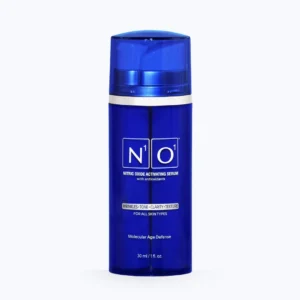
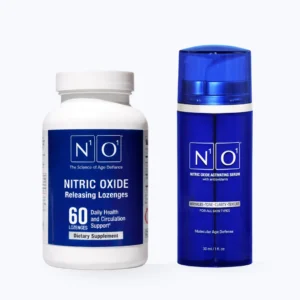
You can find my nitric oxide products here. Use coupon code NSB10 for a discount.